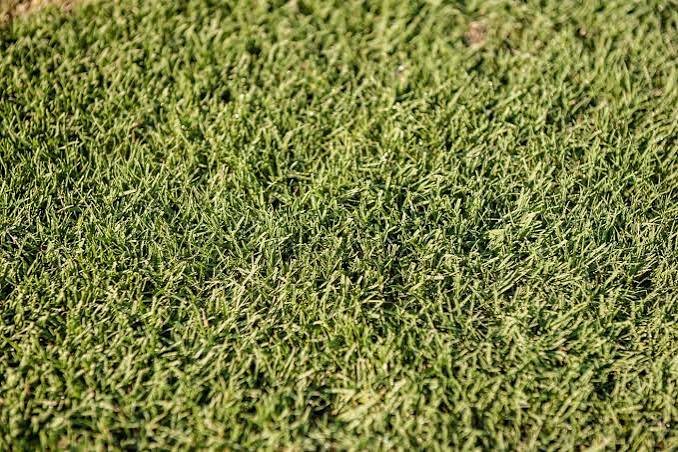

If your lawn has gone straw-colored this month, the mowing season is winding down. That makes mid-November a good time to think about mowing in a bigger way: how you finish the year, what you do over the winter, and how you start again in spring. Bermuda and zoysia want slightly different treatment at each stage.
The Basic Numbers
Here are the general guidelines for warm-season lawns in Georgia, in line with University of Georgia Extension advice:
- Tifway 419 Bermuda: about 1 to 1.5 inches. It's a fine-textured, aggressive grower that looks best kept short.
- Zoysia (Zeon, Emerald and Meyers): about 1.5 to 2 inches with a rotary mower. Zoysia grows more slowly and builds up thatch if it's cut too short and too rarely.
For frequency, the growing season (roughly May through September) usually works out like this:
- Bermuda: every 5 to 7 days in peak summer growth
- Zoysia: every 7 to 10 days
The rule that matters more than any number is the one-third rule. Never remove more than a third of the blade in a single mowing. If you let Bermuda get to 3 inches, don't chop it straight to 1 inch. Step it down over a couple of mowings.
Why Zoysia Gets Mowed Less Often
Zoysia is slower and denser. Because of that, a lawn of Zeon or Emerald can look tidy a bit longer between cuts. Meyers has a wider blade, so it can look shaggy sooner if you stretch the schedule. Bermuda in July can seem to grow while you watch. If your Bermuda lawn is mowed on a zoysia schedule, you'll be scalping it every time.
Finishing the Year
By now, most Georgia lawns have slowed way down or stopped growing. For the final mowing of the season:
- Mow once more if there's still enough growth to cut, keeping to your normal height.
- Don't scalp the lawn "to be ready for spring." Cutting dormant grass very short in fall just exposes the crowns to winter cold.
- Keep leaves from piling up. Mulching a light layer of leaves with the mower is fine. A thick, wet mat of leaves over dormant grass is not, because it blocks light and holds moisture against the turf.
Once the grass is fully dormant and not growing, you can mostly put the mower away, apart from leaf cleanup.
Use the Winter on Your Mower
This is the best time to get your equipment ready, and it's the step most people skip:
- Sharpen or replace the blade. A dull blade tears grass instead of cutting it, leaving ragged, brown-tipped edges. Zoysia's tough leaves show this quickly.
- Change the oil and replace the air filter and spark plug as your manual directs.
- Check the deck height settings so you know exactly where each notch lands. Measure from a flat surface to the blade, not by guessing.
A sharp blade and a true height setting do more for the look of your lawn than almost any product you can buy.
Spring Restart
When the lawn greens up, usually in April, wait until the grass is actively growing and the last hard frost has passed. Then do the first mow of the year a little lower than normal to clear the dead blades. Bermuda tolerates this well. With zoysia, go gently: lower it a notch, don't take it to the ground. After that, return to your regular height and schedule.
The First Mow of New Sod
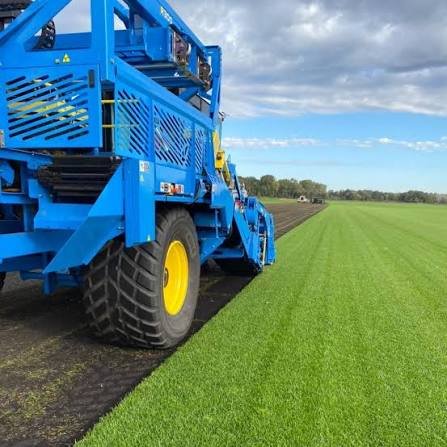
If you laid sod this fall, it probably went dormant before it was ready for a mower, and that's fine. Roots keep working underground even when the blades are brown. For sod laid in the growing season, the first mow usually comes after about two weeks, once the sod is rooted. Here's a quick check:
- Tug gently on a corner of a piece. If it resists, it's rooting.
- Let the grass grow slightly above your normal height before the first cut.
- Make sure the surface is dry enough that the mower won't leave ruts or push the seams.
- Use a sharp blade and take off no more than a third.
For the first few mowings, keep the height on the higher end of the range, then lower it gradually.
Don't Forget the Edges and the Shade
If part of your yard gets less sun, mow that area at the higher end of the range for your grass. More leaf surface means more energy captured in the low light. This is one more reason zoysia varieties such as Zeon do well where Bermuda struggles. A trusted, experienced local lawn care team, like our recommended partner Arbornomics, can also help you set up a mowing routine that fits your grass, your yard and your schedule, especially in the first year when a new lawn is most sensitive.
Ready for a Better Lawn Next Year?
If you're planning a new lawn, or replacing a tired one, now is a good time to choose your grass and get your order in. Go Green Sod delivers fresh-harvested sod across Metro Atlanta, with a 3 pallet minimum. order sod online, or call or text us at (678) 237-3111 and we'll help you pick the right variety for your yard.