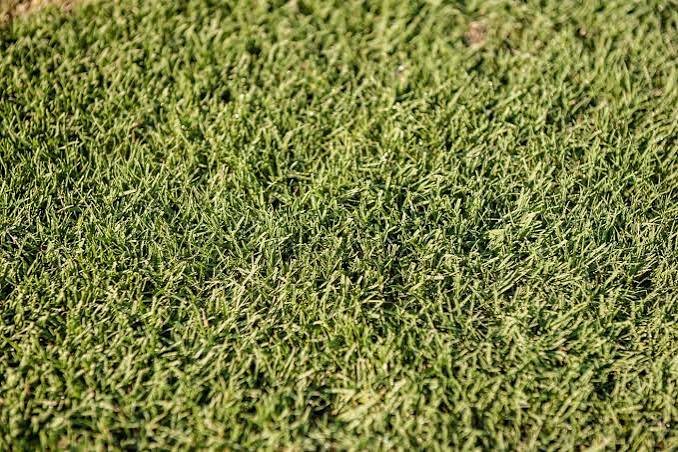

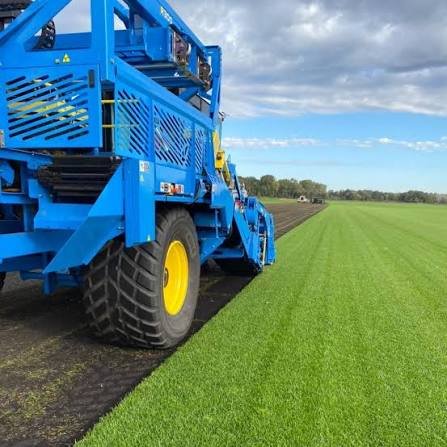
Zoysia is a patient grass. It greens up later than Bermuda, grows slower, and forgives a lot, but it still rewards you for doing the right job at the right time. Since it's mid-October, we'll start the calendar right now and run through the year. Whether you have Zeon, Emerald or Meyers, the rhythm is the same. Only a few details differ.
Fall: Getting Ready for Dormancy
October
- Keep mowing as long as the grass is growing, and don't let fallen leaves pile up on the turf. A smothered lawn thins out.
- Put down a fall pre-emergent early in the month if you haven't yet, to block winter weeds like annual bluegrass.
- Watch for large patch, a fungal disease that shows up as circular tan or orange patches when nights cool off and the weather stays damp. Avoid evening watering and heavy nitrogen now.
- Water only when it's dry. Roughly an inch a week is plenty, usually less as temperatures fall.
November
- After a frost or two, your zoysia will turn straw-colored. That's normal dormancy, not death.
- Make a final mow, then keep leaves raked or mulched finely so light and air still reach the grass.
- Skip fertilizer. Feeding a lawn that's going to sleep only invites disease and winter injury.
Winter: Mostly Rest
December and January
- Stay off the lawn when it's frozen, since dormant turf is easily damaged by heavy traffic.
- Pull winter weeds by hand, or spot-treat on a warmer day.
- If we hit a dry stretch, give the lawn a light drink every three or four weeks. Dormant grass still has roots that need some moisture.
- Winter is a good time to service the mower and sharpen the blade. Zoysia is tough, and a dull blade shreds it.
February
- Apply your spring pre-emergent in late February to early March, before soil temperatures climb into the mid-50s. This is the single most important weed-control step of the year for crabgrass and other summer weeds.
- Resist the urge to fertilize just because a warm week fooled you into thinking spring is here.
Spring: Waking Up
March
- Around the end of the month, when the grass is still dormant, do one low mow to clear off dead blades so new growth gets sunlight. Don't scalp it down to dirt. Zoysia doesn't need that.
- Bag or rake the clippings from that first mow.
April
- Zoysia usually greens up in April, a bit later than Bermuda. Be patient.
- Once it's mostly green and actively growing, start regular mowing. Typical target heights are about 1 to 2 inches for Zeon and Emerald, and about 1.5 to 2.5 inches for Meyers. Never remove more than a third of the blade at once.
- Wait until the lawn is fully green before the first fertilizer application.
May
- Apply the first fertilizer of the year, using a product and rate suited to zoysia. Zoysia needs less nitrogen than Bermuda, so don't overdo it.
- Late May is a good time to core aerate if your soil is compacted, since the grass is growing strongly and recovers quickly.
Summer: Steady Growth
June
- Check thatch. If the spongy layer under the blades is more than about half an inch thick, dethatch or aerate now, while the grass is growing fast.
- Water deeply and less often, about an inch a week including rain, rather than a little every day. Emerald is especially drought tolerant once established.
July
- A second light feeding is fine, roughly six to eight weeks after the first.
- Watch for chinch bugs and other pests in hot, dry, sunny spots, where you'll see irregular yellow-brown patches that don't green up with watering.
- Mow often enough to keep to the one-third rule, and keep blades sharp.
August
- Keep up the watering during dry spells. Any final fertilizer should go down by late August.
- Plan ahead for the fall pre-emergent and fungicide timing.
September
- Apply your fall pre-emergent when overnight lows start sliding toward the 70s or below, typically around mid to late September.
- Stop fertilizing. Let the grass slow down naturally.
- Gradually reduce watering as days shorten.
Don't Forget the Sunlight
A calendar can't fix a sun problem. Zeon needs about 3 to 4 hours of direct sun, Emerald about 4 to 5, and Meyers about 5 to 6. If your lawn is thin in a shady corner, the cause may be light rather than care. Trimming tree limbs can help more than extra fertilizer.
Consider a Local Partner
Timing matters more than any single product. Our recommended lawn care and landscaping partner, Arbornomics, is a good example of a trusted local team to lean on. An experienced local crew knows how Georgia's weather actually behaves, so they can adjust the schedule when spring comes late or fall stays warm. That kind of judgment helps a new lawn establish and an older lawn stay thick.
Ready for a New Zoysia Lawn?
Go Green Sod delivers fresh-harvested Zeon ($330 per pallet), Emerald ($300) and Meyers ($300) across Metro Atlanta, with each pallet covering 450 sq ft and a 3 pallet minimum per order. Ready to order sod? You can also call or text us at (678) 237-3111 and we'll help you pick the right zoysia for your yard.